THE ACC. THE END OF THE GREEN LINE.
Boston College
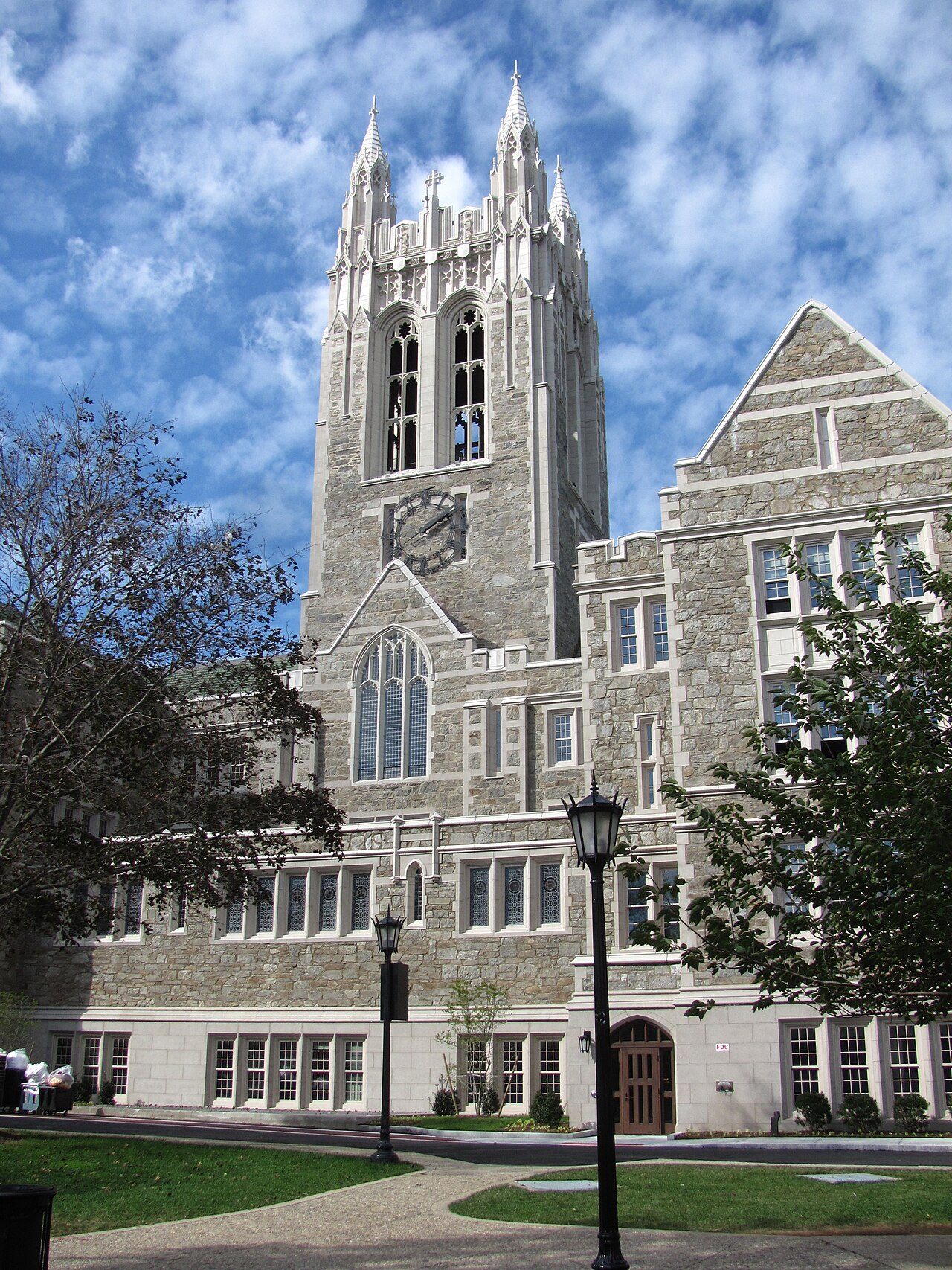
Boston College is a private Jesuit research university of about 9,700 undergraduates in Chestnut Hill, where the Green Line B branch ends at the edge of a gothic campus seven miles from downtown Boston. Skiing is one of 31 Division I varsity teams and races the EISA carnival circuit against Dartmouth, Middlebury and Vermont, but there is no hill near campus: the team's alpine training venue is the Proctor Ski Area in Andover, New Hampshire. A recruit is choosing a selective, expensive, need-based-aid school in a big city, with a small team that spends a lot of the winter on the road.
Chestnut Hill, MA
- NCAA · Division I institution
- NCAA skiing
- EISA
- Men & women
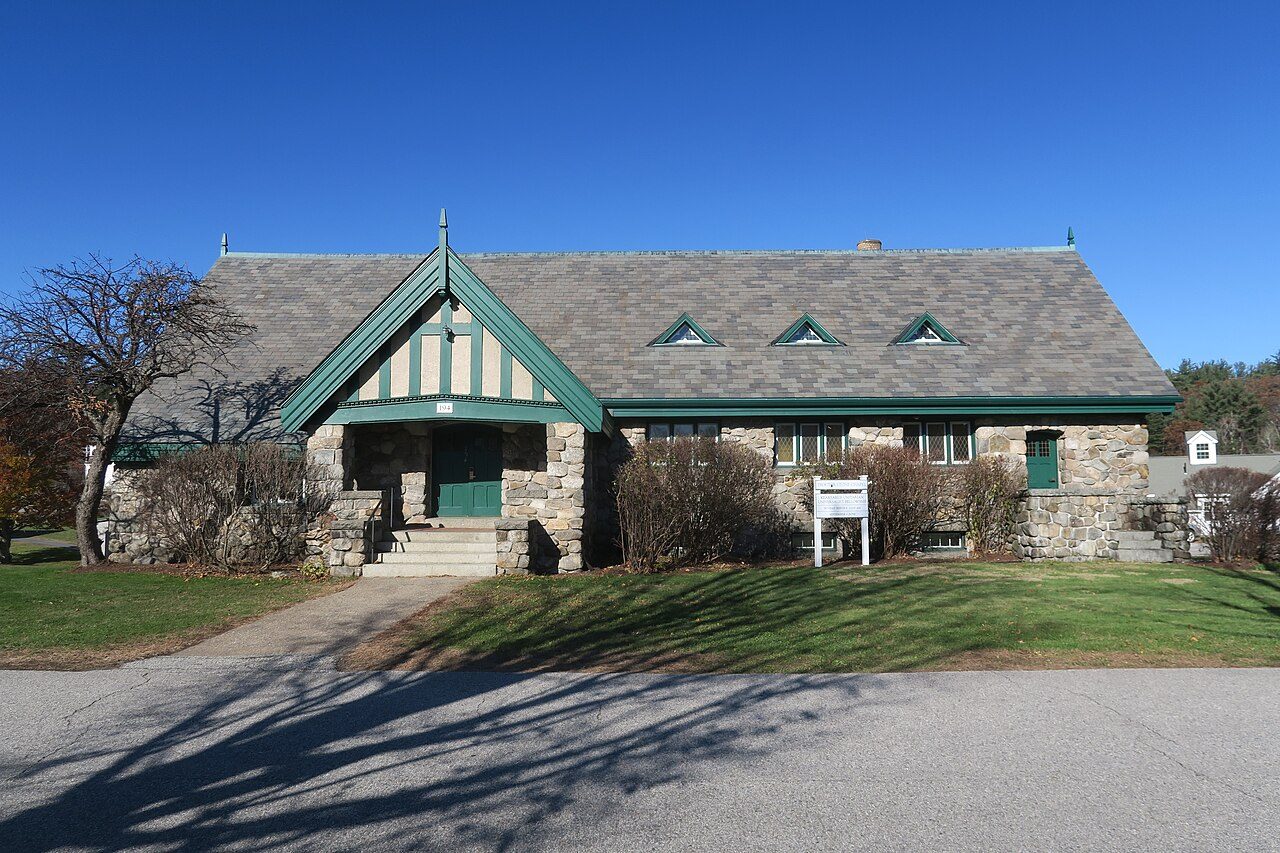
Photo: John Phelan, CC BY 3.0
Boston CollegeNCAA D1 · EISA · #14 power rank
- NCAA divisionEISA · NCAA skiing
- D1
- UndergraduatesBC Facts, 2025-26
- 9,677
- Acceptance rateClass of 2029
- 13.9%
- Cost of attendance2026-27
- $95,258
- Faculty-student ratioBC Facts, 2025-26
- 1:10
- Six-year graduation rateFall 2016 cohort (IPEDS 2022-23)
- 91%
- Roster athletes2026-27
- 20
- NCAA power rankscore 47.44
- #14
Why Boston College?
Why a racerlooks at BC
Four things that are specific to Boston College, each with the page it came from.
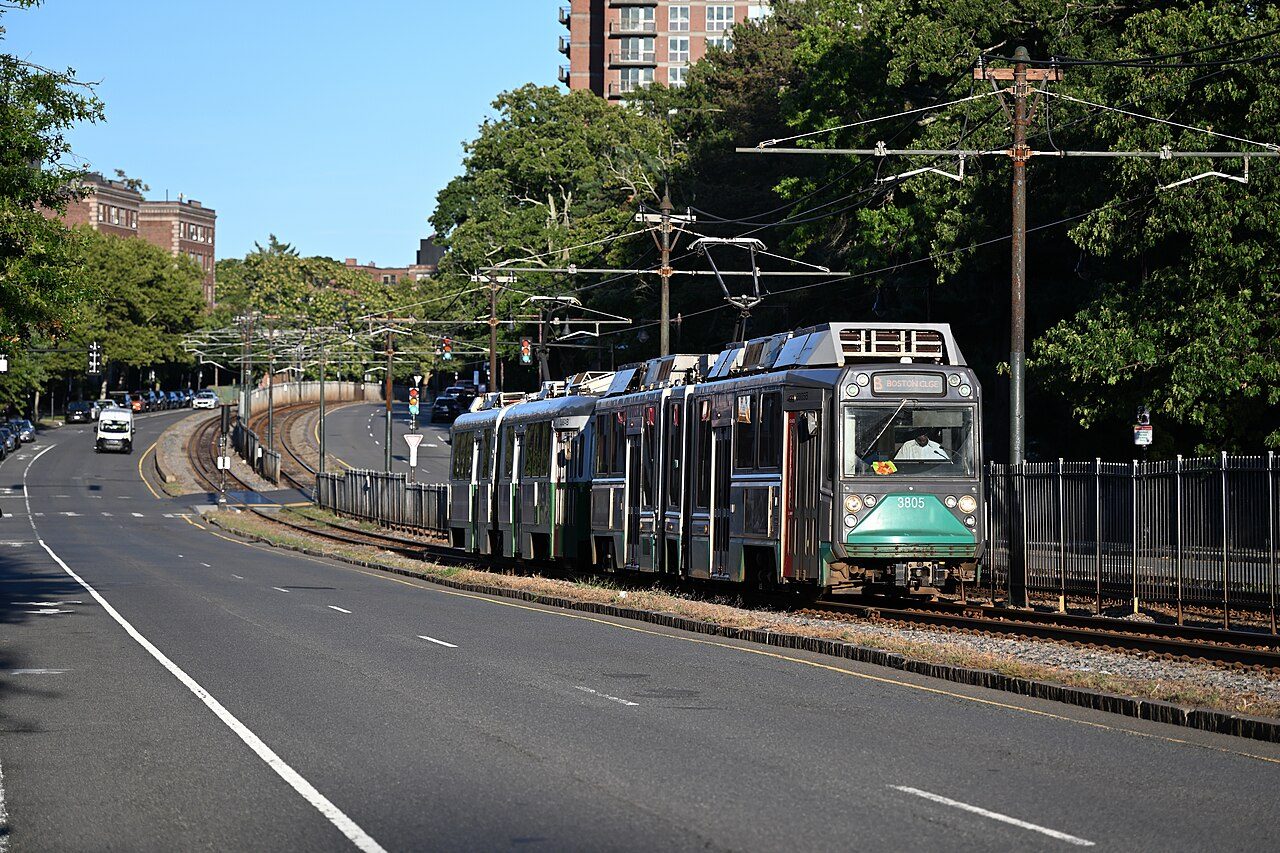
A city campus on the subway
The main campus sits at 140 Commonwealth Avenue in Chestnut Hill, at the end of the Green Line B branch, seven miles from downtown Boston by subway.(bc.edu)
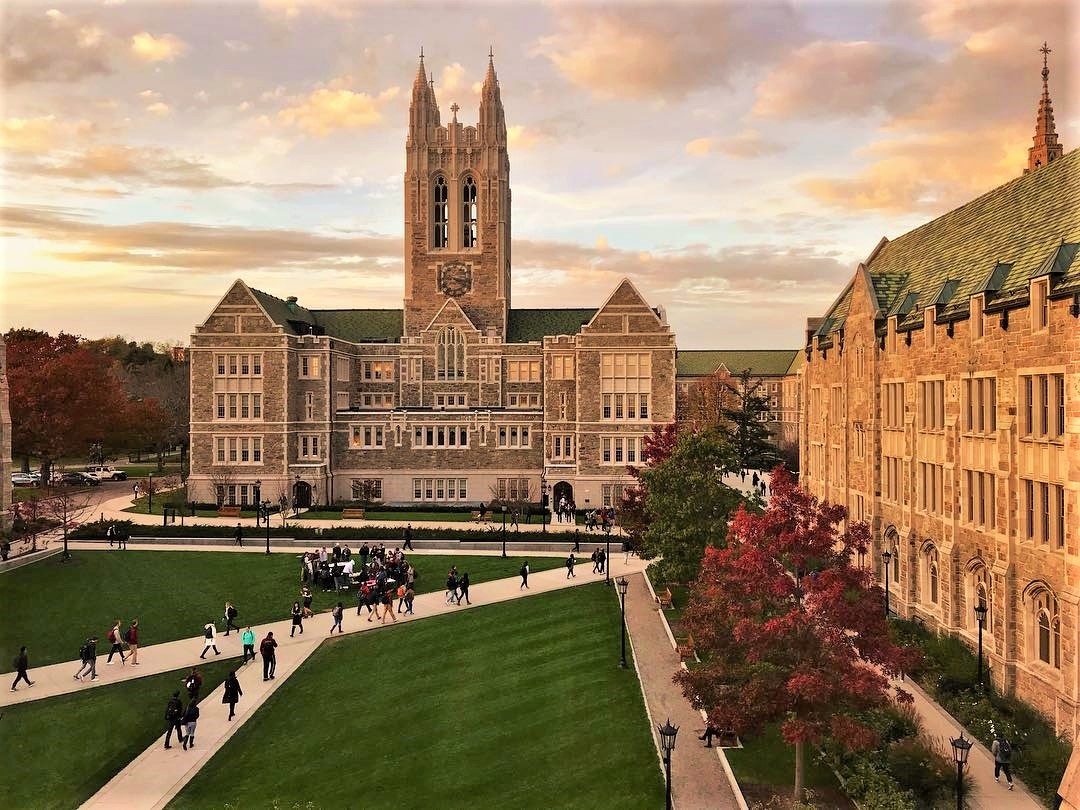
Need-blind, full-need aid
BC admits domestic students without regard to financial need and meets 100 percent of demonstrated need; the average need-based package is projected to exceed $65,000 in 2026-27 and more than 67 percent of undergraduates receive aid.(bc.edu)
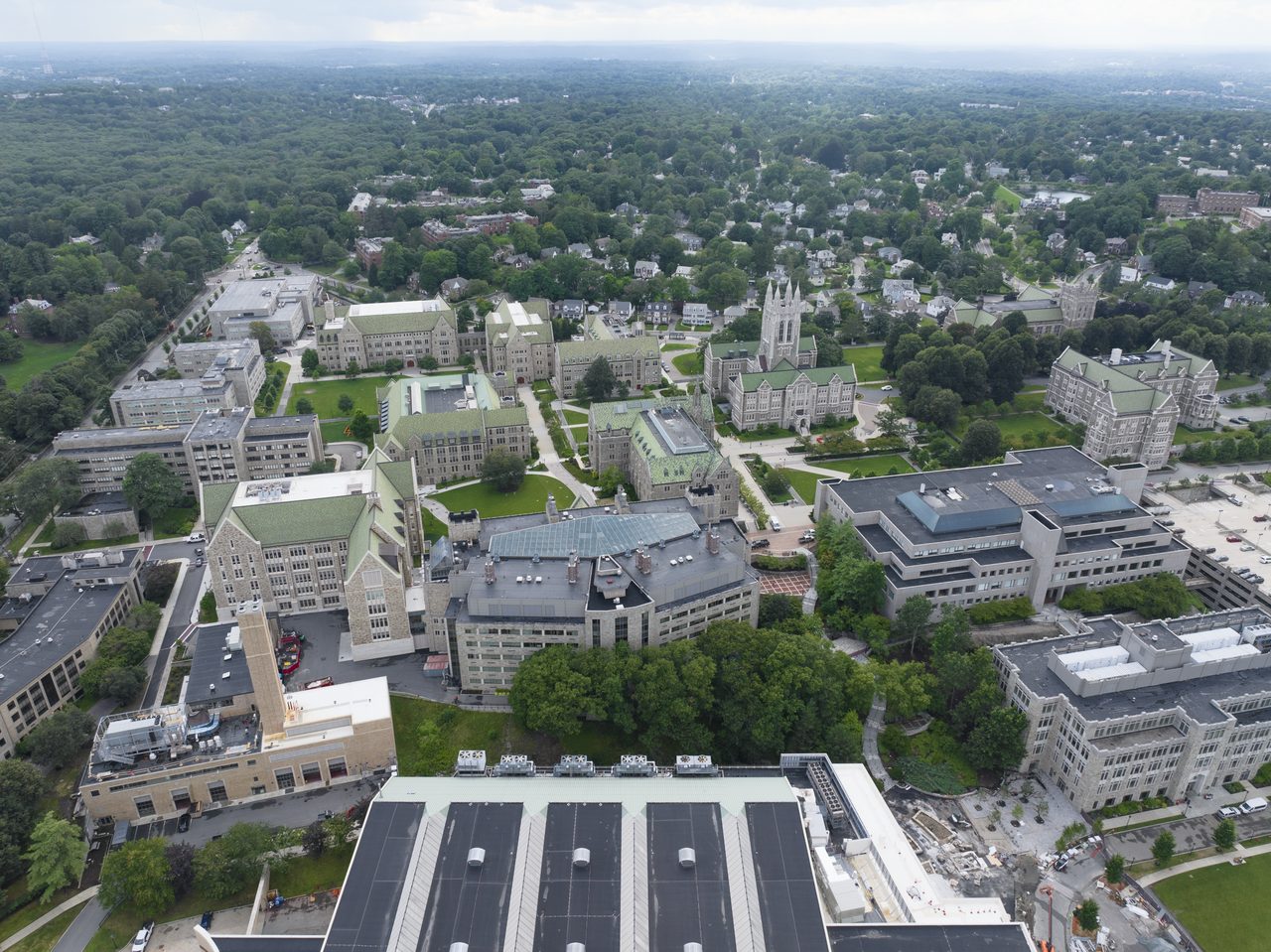
A small team inside a big department
Skiing is one of 31 Division I varsity teams with 754 student-athletes, and the Office of Student-Athlete Academic Services has eleven full-time staff serving roughly 750 athletes.(bc.edu)
Training at Proctor in New Hampshire
Proctor Academy describes its lit, snowmaking-covered ski area in Andover, NH as the home training venue for the Boston College men's alpine program; EISA lists Proctor as BC's alpine venue.(proctoracademy.org)
About the school
The honest version.
What the school is, what it is known for, and what a family should weigh before committing.
Boston College is a private Jesuit research university with about 9,700 undergraduates in Chestnut Hill, on the western edge of Boston, with a gothic main campus at the end of the Green Line. Founded in 1863, it is nationally ranked, very selective (12.6% admitted for the Class of 2029) and known for the Carroll School of Management, nursing, education and a demanding core curriculum in the liberal arts. Campus life revolves around residence halls, Jesuit service traditions and ACC athletics, with the city a short T ride away. Skiing is one of BC's 31 varsity sports and races the EISA carnivals against Dartmouth, Middlebury and Vermont; the team's weekday training base is the Proctor Ski Area in Andover, New Hampshire, so there is no home hill near campus and training means a long drive north. NCAA skiing has no division split, so the Eagles face the same fields as the Division I powers, and BC sent two skiers to the 2026 NCAA Championships. BC meets 100% of demonstrated need but offers almost no merit aid, and the 2026-27 cost of attendance is above $95,000.
Know before you commit
- Very selective and very expensive at sticker: 13.9% admitted for the Class of 2029, and the 2026-27 cost of attendance is $95,258, with essentially no merit aid outside 18 Presidential Scholarships; the price only works if need-based aid applies.(bc.edu)
- No home hill: the team's alpine training venue is the Proctor Ski Area in Andover, New Hampshire, well north of campus, so weekday training and weekend carnivals both mean long drives and a heavy travel schedule around classes.(proctoracademy.org)
- A small, largely donor-funded program: the head coach has said more than half the team's budget comes from donations, the program needs to raise roughly $100,000 a year, and there is no ski room on campus for tuning the roughly 100 pairs of skis the roster carries.(beacon.bc.edu)
- The racing season sits inside the spring semester: Spring 2027 classes begin January 19, while the 2026 carnival season ran January 16 to February 21 and the NCAA Championships were March 11-13, so skiers miss class time in the first half of every spring term.(bc.edu)
Feel the campus
From first tracks to final exams.
Credited archive photographs of the campus, the town and the hill; not current team photography.
5 of 5 photos shown
Ski team experience
Eagles skiingon the EISA circuit
Boston College skiing is an alpine-only program racing slalom and giant slalom on the EISA carnival circuit, with Proctor Academy in Andover, New Hampshire listed as its alpine venue. Alex Norden has been the James R. Maher Head Ski Coach since August 2022; the 2026-27 roster lists 20 athletes (9 women, 11 men). The 2026 season ran from the Colby Carnival at Sugarloaf on January 16-17 through NCAA Regionals at the Middlebury Snow Bowl on February 20-21, and two men qualified for the NCAA Championships at Utah Olympic Park.
- Team athletes
- 20
- Men / women
- 10 / 9
- International athletes
- 1
- Conference
- EISA
- Alpine disciplines
- SL + GS
- Athletes on the 2026-27 roster
- 20
Program overview
Boston College skiing is an alpine-only program racing slalom and giant slalom on the EISA carnival circuit, with Proctor Academy in Andover, New Hampshire listed as its alpine venue. Alex Norden has been the James R. Maher Head Ski Coach since August 2022; the 2026-27 roster lists 20 athletes (9 women, 11 men). The 2026 season ran from the Colby Carnival at Sugarloaf on January 16-17 through NCAA Regionals at the Middlebury Snow Bowl on February 20-21, and two men qualified for the NCAA Championships at Utah Olympic Park.
- DivisionNCAA Division I institution
- SkiingNCAA skiing · EISA
- Home venuesBlue Hills, Canton MA (~25 min) and Pats Peak, Henniker NH (~1.5 h); Proctor Academy for carnivals
- SidesMen & women
At the 2026 NCAA Skiing Championships at Utah Olympic Park in Park City (March 11 and 13, 2026), Bode Flanigan finished 20th in giant slalom in 1:57.80 and 21st in slalom in 1:36.98; Nick Kirwood was injured on his second GS run and withdrawn.(bceagles.com)
Questions for the coach
No published training week for this program, so these are the questions to ask.
- Winter termSpring 2027 classes begin January 19 and the 2026 carnival season ran January 16 through February 21, with NCAA Championships in mid-March. How does the team handle the first weeks of the spring semester, and which courses do skiers avoid in the spring?
- Getting to snowBC does not publish a drive time to the Proctor Ski Area in Andover, NH. How many days a week does the team train there in season, who drives, and what does a training day look like from door to door?
- Core curriculumEvery undergraduate completes a 15-course core across ten areas. How do skiers sequence those requirements so that lab sciences and Thursday-Friday classes fall outside the carnival season?
- Paying for itBC meets full demonstrated need but publishes no athletic-aid policy for skiing. Does the program offer any athletic scholarship money, or should the family plan on need-based aid alone?
Coaching staff
- Alex NordenAlpine
Women
| # | Athlete | Yr · seasons left | SL | GS |
|---|---|---|---|---|
| 1 | Brooke Brown USA · 2006 · scorer | FR · ≤4 | 46.30 | 56.12 |
| 2 | Fiona Sawyer USA · 2004 · scorer · list 4† | SR · ≤1 | 71.33 | 52.94 |
| 3 | Emma Powers USA · 2005 · scorer | JR · ≤2 | 56.56 | 71.93 |
| 4 | Carly Hamilton USA · 2005 · list 4† | JR · ≤2 | 57.02 | 79.65 |
| 5 | Sophia Bechtel USA · 2007 | FR · ≤4 | 64.15 | 60.65 |
| 6 | Cara Dempsey USA · 2007 | SO · ≤3 | 72.60 | 60.87 |
| 7 | Abby Kelleher USA · 2006 | FR · ≤4 | 70.61* | 84.95 |
| 8 | Lucy Curtis USA · 2005 | JR · ≤2 | 71.26 | 96.99 |
| 9 | Molly Queally USA · 2004 · list 4† | SR · ≤1 | 84.89 | 97.70 |
† Not on the current FIS list (licence not renewed yet this season); points are from the athlete’s most recent list.
* USSA national points, shown where the athlete has no FIS points in that discipline. Not directly comparable to FIS points.
Men
| # | Athlete | Yr · seasons left | SL | GS |
|---|---|---|---|---|
| 1 | Porter Sullivan USA · 2006 · scorer | FR · ≤4 | 35.37 | 47.85 |
| 2 | Gunnar Travis USA · 2003 · scorer | SR · ≤1 | 37.74 | 38.86 |
| 3 | Henry Andrie USA · 2006 · scorer | SO · ≤3 | 42.74 | 42.24 |
| 4 | Colin Hanna USA · 2004 | SO · ≤3 | 87.97 | 42.72 |
| 5 | Nick Kirwood USA · 2004 | SR · ≤1 | 43.20 | 44.09 |
| 6 | Chase Kelly USA · 2005 | JR · ≤2 | 49.92 | 45.73 |
| 7 | Pedro Holscher CHI · 2004 | JR · ≤2 | 46.57 | 52.51 |
| 8 | Ty CHRISTENSENyou USA · 2007 | — | 53.66 | 66.37 |
| 9 | Henry Krehbiel USA · 2005 | JR · ≤2 | 54.62 | 99.98 |
| 10 | Patrick Byron USA · 2004 | SR · ≤1 | 112.59 | 75.57 |
| 11 | William Camp USA · 2005 | JR · ≤2 | 78.02 | 81.55 |
| 12 | Otto Mork Stockholm, Sweden · no FIS or USSA points found | SO · ≤3 | — | — |
* USSA national points, shown where the athlete has no FIS points in that discipline. Not directly comparable to FIS points.
Names from the school's published 2026-27 roster; FIS points attached by name from the athlete's most recent list. (source)
NCAA Division I roster limit: 16 for men's skiing and 16 for women's skiing at participating institutions; the alpine/nordic split is not confirmed. (ncaa.org)
Team strength
best-three average · scoring line = 3rd best| Side | SL | GS | SG | DH | Athletes |
|---|---|---|---|---|---|
| Men | 38.62 line 42.74 | 41.27 line 42.72 | 115.01 line 165.57 | 122.63 line 157.19 | 10 |
| Women | 53.29 line 57.02 | 56.57 line 60.65 | 119.59 line 138.02 | 265.56 line 377.24 | 9 |
Power score 47.44: mean of the men’s and women’s best-three SL and GS averages, ranked #14 in its group.
Where Ty fits today
Not a selection or admission prediction.
- SLDevelopment53.66 · 7th of 11
Scoring line 42.74: 10.92 points to drop.
- GSDevelopment66.37 · 8th of 11
Scoring line 42.72: 23.65 points to drop.
- SGNo comparison— · —
Scoring line 165.57.
- DHNo comparison— · —
Scoring line 157.19.
What it takes to reach the scoring line
No results this season yet. 3 results averaging 42.74 would get there.
- World Cup (min penalty 0): finish within 5.85% of the winner
- NorAm / Europa Cup (min penalty 15): finish within 3.8% of the winner
- National Championships (min penalty 20): finish within 3.12% of the winner
- FIS / University / Junior (min penalty 23): finish within 2.7% of the winner
- Citizen (min penalty 40): finish within 0.38% of the winner
No results this season yet. 3 results averaging 42.72 would get there.
- World Cup (min penalty 0): finish within 4.23% of the winner
- NorAm / Europa Cup (min penalty 15): finish within 2.74% of the winner
- National Championships (min penalty 20): finish within 2.25% of the winner
- FIS / University / Junior (min penalty 23): finish within 1.95% of the winner
- Citizen (min penalty 40): finish within 0.27% of the winner
Percentages use this list’s F-values.
Academics
What you can study.
Boston College runs a two-semester calendar: the 2026-27 fall term runs August 31 to December 10 and the spring term January 19 to May 6, 2027, so the EISA carnival season (mid-January to late February) and the NCAA Championships (mid-March) fall inside the first half of every spring semester. All undergraduates complete a 15-course core in arts, cultural diversity, history, literature, mathematics, natural science, philosophy, social science, theology and writing, in addition to a major in one of four undergraduate schools.
- 9,677Undergraduates
- 1:10Faculty-student ratio
- 91%Six-year graduation rate
8 featured fields · full catalog
- FinanceBusinessOne of nine concentrations in the Carroll School of Management, alongside accounting, marketing and information systems.
- Computer ScienceQuantitativeOffered in the Morrissey College of Arts and Sciences; the Lynch School also lists a Mathematics/Computer Science major.
- NursingHealthThe Connell School of Nursing offers the B.S. in Nursing and a Global Public Health and the Common Good major.
- Human-Centered EngineeringEngineeringBC's engineering major, housed in the Morrissey College of Arts and Sciences.
- EconomicsSocial scienceA Morrissey College major that appears among BC's most popular undergraduate programs.
- BiologyScienceMorrissey College also lists biochemistry, chemistry, neuroscience and physics among its science majors.
- Environmental StudiesEnvironmentOffered alongside Environmental Geoscience and Geological Sciences in the Morrissey College.
- Applied Psychology and Human DevelopmentSocial scienceA Lynch School of Education and Human Development major; the school also offers elementary and secondary education.
Source: bc.edu
Admissions
Your path here.
- Testing
- test-optional(bc.edu)
- Middle 50%
- Average SAT 1471 and ACT 34 among submitters (Class of 2029); middle-50% ranges not published(bc.edu)
- Application deadline
- January 4 (Regular Decision and Early Decision II); November 1 (Early Decision I)(bc.edu)
- Submit the Common Application and choose one of the four undergraduate schools (Arts and Sciences, Management, Education and Human Development, or Nursing).
- Answer one Boston College writing supplement prompt (400-word limit).
- Have your school send the transcript, school report and counselor recommendation, plus two teacher evaluations from core academic subjects.
- Pay the $85 fee or request a waiver, and send a mid-year grade report if applying Regular Decision or if deferred.
Acceptance rate
How selective it is.
- Admitted
- Not admitted
Admission is need-blind and test-optional, and BC says scores are one factor among many in a holistic review. Athletes apply through the same Common Application process as everyone else; the coach's interest does not change the academic standard, and about 14 percent of applicants were admitted for the Class of 2029.
Source: bc.edu
Cost & financial aid
What a year costs.
2026-27 published figures.
| Tuition | $75,070 |
|---|---|
| Fees | $1,354 |
| Housing | $11,270 |
| Food | $7,564 |
| Total cost of attendance | $95,258 |
Figures are BC's published 2026-27 undergraduate charges; books, travel and personal expenses are extra. BC is need-blind for domestic students and meets 100 percent of demonstrated need; the need-based aid budget is $197.7 million, the average need-based package is projected to exceed $65,000, and more than 67 percent of undergraduates receive aid. The only merit award is the full-tuition Presidential Scholarship for 18 students a year (apply by the November 1 priority deadline). BC does not publish whether its skiing program awards athletic aid; ask the coach.(bc.edu)
Financial aid informationLocation
Campus, hill, airport.
140 Commonwealth Avenue on the Boston-Newton line, with 30 residence halls on campus and the Green Line B terminus at the gate.
Student life
Beyond the hill.
Living on campus
Nearly 80 percent of undergraduates live on campus in one of 35 residence halls, and all first-years are housed on Upper Campus or Newton Campus; BC describes most students living in campus housing in their first, second and fourth years.(bc.edu)
Recreation and the Res
The 244,000-square-foot Margot Connell Recreation Center has an elevated running track, climbing walls and an aquatics center; 857 students play club sports, and the 1.6-mile loop around the Chestnut Hill Reservoir is the standard running route.(bc.edu)
Jesuit traditions and campus rituals
BC offers Ignatian retreats for students of all faith backgrounds, and the campus calendar runs from Weeks of Welcome and football tailgates to Marathon Monday, when the Boston Marathon passes Mile 21 at the campus gate.(bc.edu)
Athlete voices
Real stories.
“It's really important for me to bring in athletes that are fast skiers, but more importantly are going to represent us well in the classroom and the community.”
Alex Norden, James R. Maher Head Ski Coach · source “We need a ski room to be able to tune all of our equipment right here on campus.”
Alex Norden, James R. Maher Head Ski Coach · source “We want to keep developing young talent and finding kids that other schools overlooked. We want more Parkers.”
Chuck Carmone, former BC ski coach · source
Alumni & outcomes
What came next.
- Class of 2025 employed, in graduate school or in a fellowship or service program within six months(bc.edu)
- 96.6%
- Median starting salary, Class of 2025(bc.edu)
- $74,000
- Six-year graduation rate, fall 2016 cohort(bc.edu)
- 91%
- Varsity teams with a 100% graduation rate(bc.edu)
- 18
- Skiers at the 2026 NCAA Championships(bceagles.com)
- 2
Sources, rights and updates
Where this comes from.
Every figure carries its reporting period and a link. Rosters and points come from official rosters and FIS or USCSA results. Photographs are Wikimedia Commons archive images under open licences, credited on each image.
- bc.eduopens in a new tab
- beacon.bc.eduopens in a new tab
- bceagles.comopens in a new tab
- eisaskiing.orgopens in a new tab
- proctoracademy.orgopens in a new tab
- commons.wikimedia.orgopens in a new tab
41 source pages across 6 sites
Your future in skiing starts here